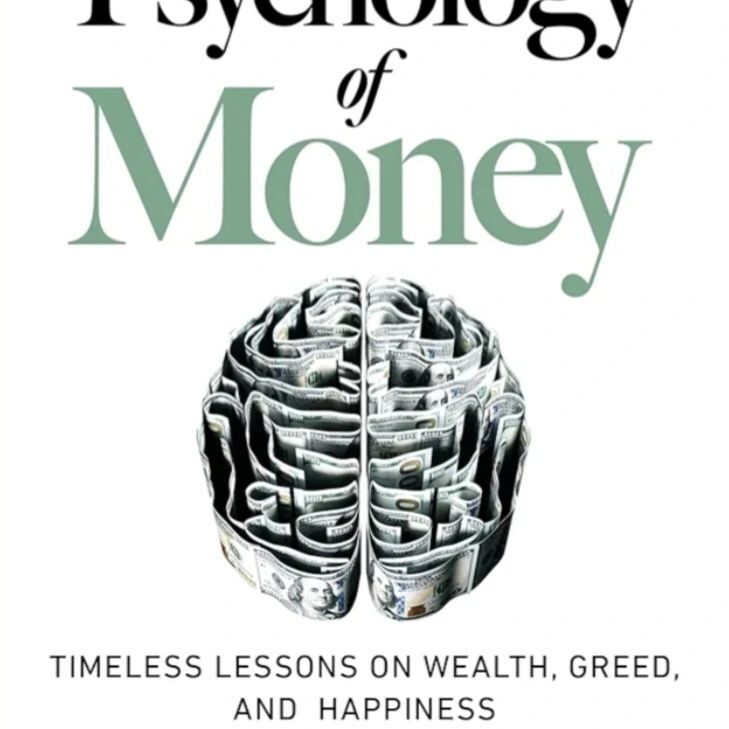
*Dr Sustainability’s Recommended Read – The Psychology of Money*
🗓 Recently, a few people have mentioned to me how ‘money is tight’, after over spending during the festive period. This got me thinking, is money actually tight or do we need to consider our relationship with money for long-term sustainability of society and the economy.
🧠 As a result, my recommended read is ‘The Psychology of Money’ authored by Morgan Housel.
📚 I came across the book in recent years and it was also highly recommended this month by Declan Kiely, a retirement and investment specialist.
📲 The book is available in a range of formats including more sustainable methods including Audible and Kindle.
🏆 The publication has made it to the Sunday Times number one bestseller list, with 7 million+ copies sold around the world.
🤫 Often when we speak of money it can be viewed as a ‘dirty’ ‘private’ topic, aswell as one heavy on numbers, but there is more psychology to money, as the author explains.
📖 The publication is broken into 20 short chapters to outline money is not a hard science but more soft skills; less physics and more psychology.
👨👩👦👦 Your personal experience, upbringing (including other people’s choices e.g. parents) connected to money impacts your relationship with money and how you view how the world of money works.
💸 The author reminds you though money has been around for a long time, our understanding of it in present form is quite new.
👩🦳👨🦳 ‘Retirement’ only came about in the 1980s…well that is a new-ish idea. The concept of lending, student loans etc is relatively new too. This brings to light we are learning and growing in this space; at times we are ‘winging it’ to some degree.
🔮 The book explains a financial decision makes sense to you at the point you make the decision, but may seem totally irrational to others. For example, Bill Gates shared in the early days of Microsoft a core goal was to have enough money in the bank account at any point to cover all staff salaries for a year. This may not have made sense to others but in the face of starting-up a business, financial stability of your staff and business is important. It clearly made sense to Bill, inorder to make bold long-term business decisions.
🎲 Housel, through the chapter outlines elements of ‘trial and error’ with money, money is ubiquitous, how intuitive play its part, compounding investments and how it works, luck and risks are siblings, linear views of money exist and the importance to leave room for error. In essence…plan on your plan not going to plan.
🧩 My favourite part in the book was the coverage of gaining ‘financial independence’, which is important to me. Financial independence was summed up well in Chapter 20: ‘Independence doesn’t means you’ll stop working. It means you only do the work you like, with people you like, for the times you want, for as long as you want.’
I hope you enjoy the book as much I have.
Happy Reading Folks!
Source: https://www.linkedin.com/feed/update/urn:li:share:7289666041863942145