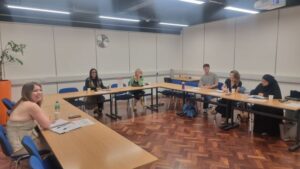
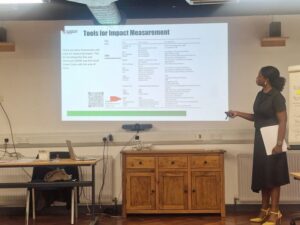
Today, I had the pleasure of joining a session led by Dr Sally Kah on Impact Measurement for Social Enterprises.
The conversation around ‘impact’ has been evolving. Running a social enterprise means taking on dual roles, sometimes even more.
For me, this session was particularly timely as I continue to lay the foundation of my social enterprise. With the process comes the responsibility to demonstrate not just what we do, but why it matters and how we know.
Dr Kah broke this down with real clarity:
• What good impact looks like — beyond outputs, into real change
• Why measurement matters — to direct funds, resources, and strategy
• Theories and frameworks — the foundations that guide us
• Methodology — how we design measurement that’s rigorous, not performative
• Tools and software — to capture data and evidence credibly
For grant-funded work, this also becomes even more critical. Measurement keeps funders informed, helps us course-correct, and shows clearly where we are — and are not — on track.
The most important takeaway for me: No single tool or framework is perfect. The work lies in tailoring it.
Aligning organisational goals with impact measurement, and vice versa, integrates them further. That alignment transforms measurement from a reporting exercise into a learning system.
What struck me most was the reframing of impact itself. It’s not only about programme delivery; it’s also about internal impact. How a programme can shift an organisation to model itself as a learning organisation. That’s where sustainability truly begins — in the culture, motivation and the iterative process of improving.
Impact measurement, when done well, is not bureaucracy. It’s direction.