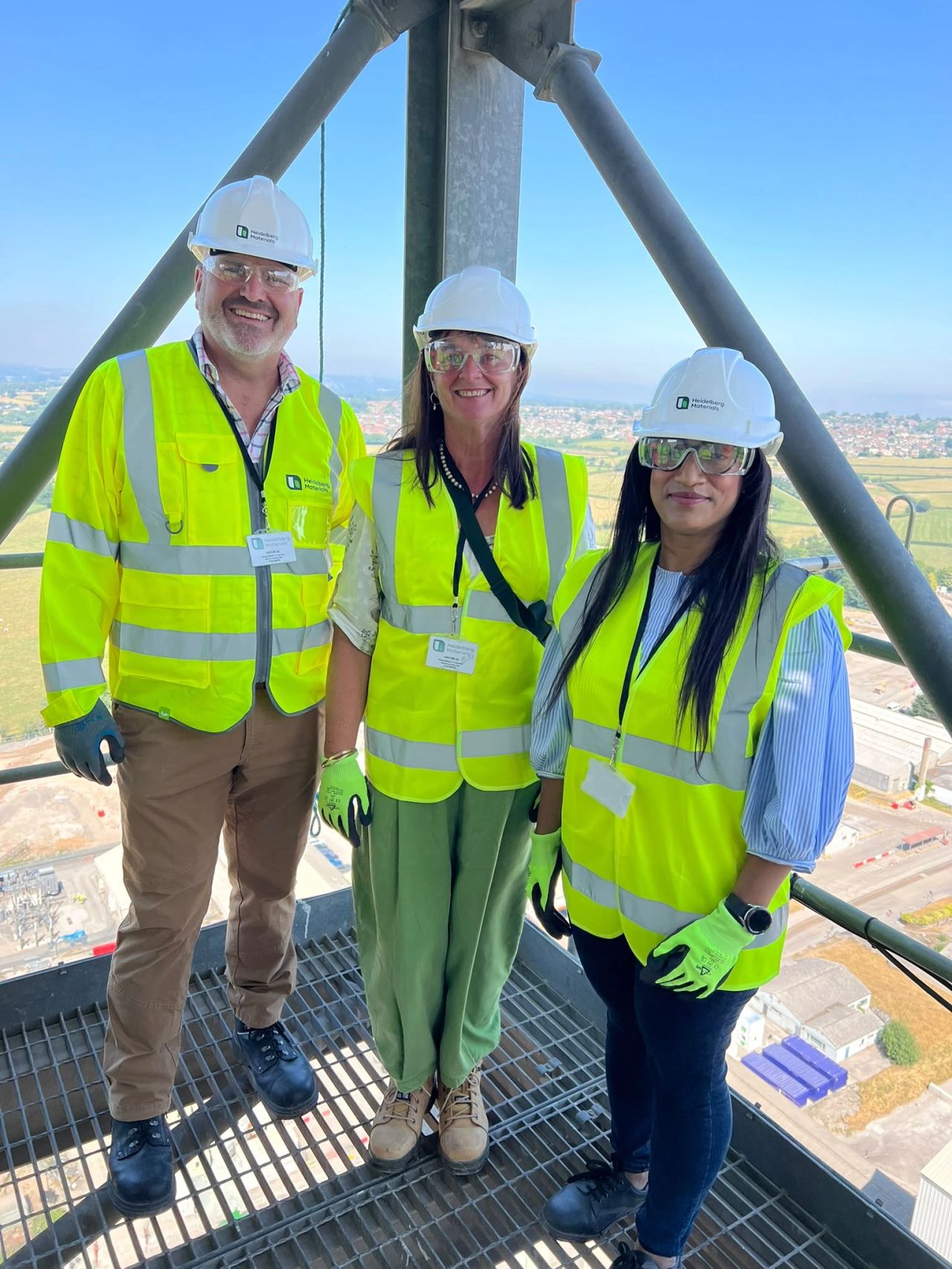
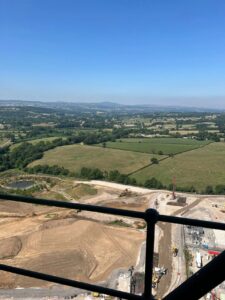
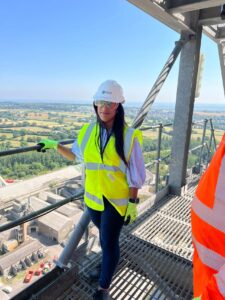
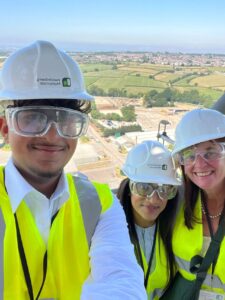
I had the opportunity to visit the Heidelberg Materials Padeswood site with in North Wales with Cyfoeth Naturiol Cymru / Natural Resources Wales members, which has provided me with a lot to consider.
The visit focused on the decarbonisation of one of the most challenging sectors: cement.
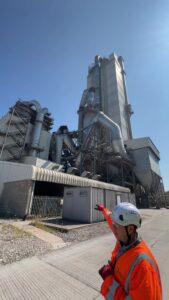
Walking the site and learning about the carbon capture plans made the concept tangible. This is what industrial net zero looks like in practice.
What’s happening at Padeswood?
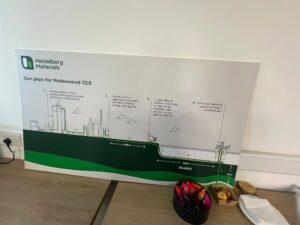
Heidelberg Materials is constructing the UK’s first carbon capture facility at a cement works, aiming to capture approximately 800,000 tonnes of CO2 per year from the plant.
This CO2 will be transported via pipeline for permanent storage under Liverpool Bay as part of the HyNet North West cluster.
The ambition is to produce evoZero, the world’s first carbon-captured near-zero cement at commercial scale, with production set to begin in 2029.
What is carbon capture?
Carbon Capture and Storage (CCS) captures CO2 emissions from industrial processes before they enter the atmosphere and stores them safely underground.
Why is it important?
Cement production contributes around 7-8% of global CO2 emissions, primarily from the chemical process of making clinker, not just from fuel combustion.
This indicates that renewable energy alone cannot resolve the issue. For cement, CCS is the only feasible pathway to complete decarbonisation.
What’s special about Padeswood?
1. A UK first: It will be the UK’s first carbon capture-enabled cement plant.
2. Scale and jobs: Designed to capture approximately 95% of emissions from the kiln, securing over 120 existing jobs and creating more during construction.
3. System approach: An anchor project for HyNet North West, demonstrating how industry clusters can share CO2 transport and storage infrastructure.
It was a privilege to learn more and explore the site to see how everything operates.
To achieve the infrastructure necessary for net zero, from wind farms to hospitals to homes, we require low-carbon materials for construction.
Projects like Padeswood illustrate how this can be accomplished.
 .
.