Part 1/2
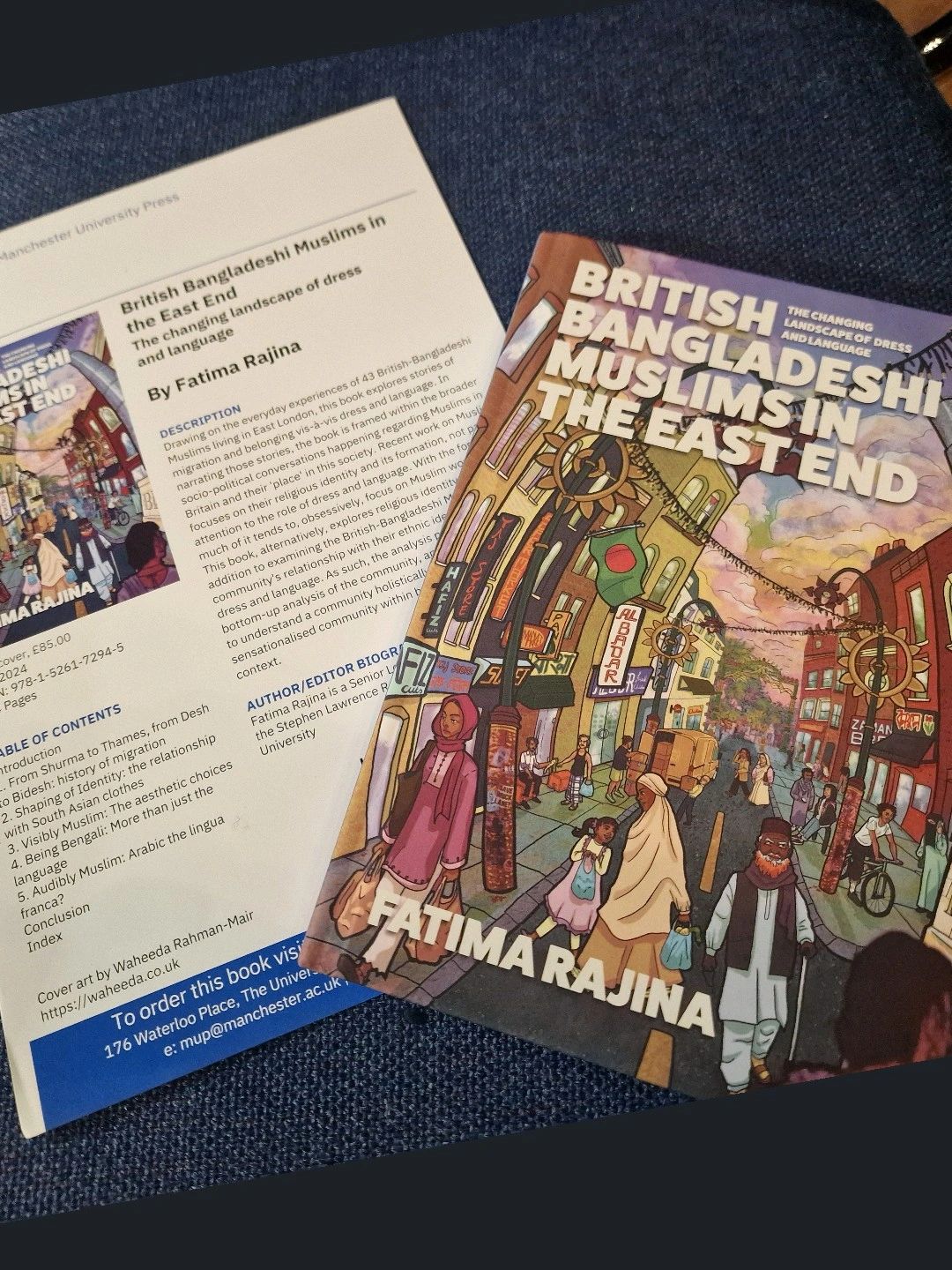
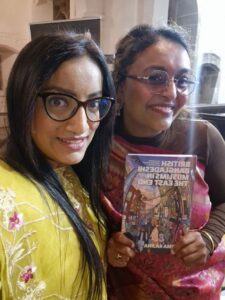
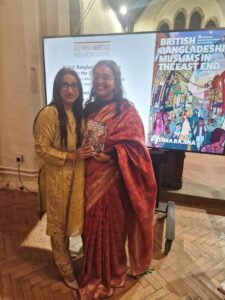
After an evening book launch with Dr Fatima Rajina (…yes, my niece) I not only left as a very proud Auntie but also remembered how I’m also deeply connected to her research through my own lived experiences.
Fatima’s book focuses on the landscape of language and dress of British Bangladeshi Muslims located in the East End of London.
*Bangladesh*
– For those not familiar with Bangladesh, Bangladesh is a country located east of India, home to nearly 170 million people on a densely populated land.
– Over decades and centuries Bangladeshis fought for liberation. The country had once been referred to as ‘East Pakistan’ and prior to that formed part of what I refer to ‘old’ India (…pre-British partition of India).
– Given the turbulant history of the country and recent unrest identity, sacrifices, culture, religion, history and heritage have played a fundamental role within those that identify as Bangladeshi. This in itself is a sustainability conversation.
*Migration and intergration into the UK*
– Fatima eloquently covered the context of the UK, history and heritage of the East End of London including the Dock, commercial road.
– A large volume of Bangladeshis over decades have migrated from Bangladesh and settled in the East End of London.
– Fatima outlined though the Asian community can be viewed to have done well in areas of entrepreneurship and education, it is fact the poorest community in the UK of all for last 20 yrs has been Bangladeshi community. The community has however made recent positive strides.
– It is important to unpack culture through the lens of different communities to have a rich understanding.
*Discussion takeaways – Dress *
– A large population of Bangladeshis follow the religion of Islam. Though faith and culture can align, they do also at times clash too such as on ‘dress’.
– Moving to/growing up in the UK adds another layer of identity and culture.
– Language and dress are aspects within the community that have also adjusted due to influences of other cultures, country traditions and also practicalities. For example, sarees our mothers may have worn ‘day to day’, have not followed through to our generation.
– Faith based clothes and teaching have overridden ‘home country’ clothes e.g the saree is limited in wear day-to-day, with the increase of Burka (a loose long gown) worn.
– Clothing has also adjusted to sympathically intergrate into the UK, whilst trying to remain aligned with one’s culture and faith.
– Academic research in the area tends to focus on extremes, which are sensationalised in the news such as the Burka (a long gown worn by muslim women) as a means of oppression, which often is not the case.
– Asian muslim men spend significant time, money and care in respect of grooming, colognes and clothing, all the way down to the fabric and tailored outfits including the ‘traditional’ Thobe (a long gown).
– Academic research does not any paper focused on clothing of asian muslim men.

Source: https://www.linkedin.com/feed/update/urn:li:ugcPost:7265527922327752704