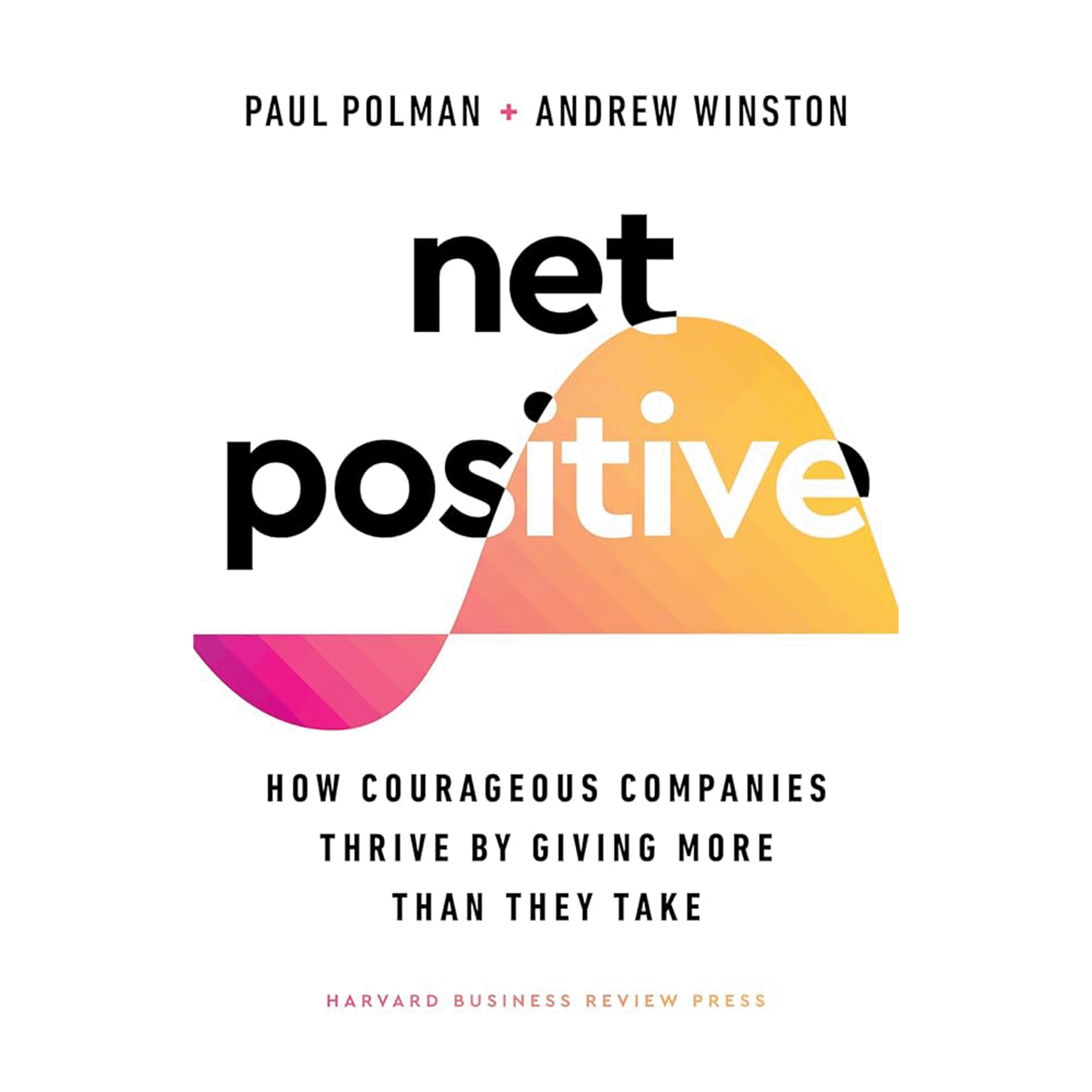
In era where organisations and governments are still grappling with the idea of Net Zero, yet making bold pledges, I came across a book, which pushes the boundaries even further, making it an interesting read. For that reason, the book ‘Net Positive’, co-authored by Paul Polman (former Unilever CEO) and Andrew Winston, a sustainable business leader, is my Recommended Read for this month. The book is self-labelled as a seminal book and explodes fifty years of dogma.
Publishers, Availability and Format
· The book is published by Harvard Business Review Press.
· Available to purchase through Amazon, World of Books and Waterstone.
· The book is reasonably priced, available in more sustainable formats such as Kindle and Audible, as-well as the traditional hardcover and paperback formats.
The Net Positive concept
The book goes far beyond the premise of Net Zero, which at present appears to be somewhat the current buzzword. The argument put forward within the book is that businesses can and should become ‘Net Positive’, in essence giving more to the world than they take, taking ownership, partnering and improving lives of everyone it touches. The book discusses challenges one may face when trying to become Net Positive as an organisations. In that respect is offers guidance and advice.
The Testimonials
This book holds pages upon pages of testimonials from leading figures and establishments including Richard Branson (founder of Virgin Group), Satya Nadella (Chairman and CEO of Microsoft), the World Trade Organisation and even the United Nations’ special Envoy for Climate Action and Finance. The book really has pushed the boat out with these testimonials. Given there are some big names and organisations backing the book, I wanted to find out more.
Compelling call to leaders
The reality is that world is literally changing around you as you read this article and perhaps not for the betterment for our generation. The book makes a compelling call to leaders to take responsibility, asking leaders to literally be brave, think radically and take on the challenge for the world you/they want to see. It is a call for business leaders to step-up and take the steering wheel in pursuit of opportunity and purpose. The book redefines business and stakeholder capital, and situates itself deeply rooted in real life problems. It argues courageous companies thrive by giving more than they take.
Talking to your human side
With chapter emotively talking to you, titled for example as ‘How much do you care?’, it becomes hard not to bring the conversation to a basic humanistic level. Empathy, a high level of compassion, humility and humanity as discussed within chapters.
There is a discussion around building trust, transparency and also ‘embracing the elephants’, in-essence managing issues nobody wants to talk about, but we can’t avoid. Some heavy concepts of system thinking and inequality are also addressed within chapters, which sometimes get taken for granted when discussing radical changes. Additionally, I was encouraged to see the coverage of culture, partnering and sharing best practices to drive systemic change.
The round-up
By no means am I suggesting the book and its strategies are a full toolkit to implement the level of change needed. Nor am I suggesting that all organisations should now start making Net Positive pledges. At times, in practice, implementation can be quite complex. As a result, deep considerations need to take place when making any bold pledges, be it Net Zero or Net Positive.
I do, however, believe the book gives some level of hope, addresses concerns leaders may be faced with, offers advice and talks to you on a level to inspire you to make change, as that is the right thing to do, as you are an agent of change. For that reason I believe the book is an inspiring read.